You search for an electric car for your self drive trip in Chennai or Bangalore. Most platforms either do not have one or list one that is never actually available when you want it. There is a real reason for this gap — and it is not that rental companies do not want to offer EVs. Globally, EV listings on car-sharing platforms represent 12-15% of total inventory. In China, EV adoption in passenger vehicles is 38%. In Europe, 21%. In India: 2%. The infrastructure gap that drives this is significant. India has approximately 3,500 public EV charging stations across the entire country. The USA has over 170,000. China has over 7 million. A rental company putting an EV in its fleet in India faces challenges that simply do not exist for the same company operating in Germany or California. This guide explains every one of them honestly — and explains where EV rental works perfectly right now in 2026.
The Global Picture — Why India Is Different
| Country | EV penetration 2024 | Public chargers | EV rental availability |
|---|---|---|---|
| China | 38% | 7 million+ | Very high — standard |
| Europe | 21% | 600,000+ | High — most platforms |
| USA | 9.3% | 170,000+ | Medium — growing fast |
| India | ~2% | ~3,500 | Very low — limited routes only |
The EV rental gap in India is not a business decision — it is an infrastructure reality. Zoomcar's own pilot program with EVs highlighted substantial consumer interest but revealed operational and infrastructure constraints particularly for long-distance travel and intercity routes. India Brand Equity Foundation's May 2026 report noted directly that the confidence in the ecosystem of electric vehicles depends greatly on the presence of appropriate charging infrastructure — and that consumers are concerned about availability and reliability of charging which may lead to fears of being stranded without sufficient charge.
The 5 Real Reasons EV Rental Is Scarce in India
Reason 1 — Renters Cannot Charge Overnight at Home
This is the structural difference between owning an EV and renting one that almost nobody talks about clearly. An EV owner plugs in at home every night. The car charges while they sleep. Range anxiety disappears because every morning starts with a full battery. A renter does not have this option. The rental car is delivered charged — and when the charge runs down during the rental, the renter must find a public charging station. In Chennai and Bangalore, public fast chargers exist at some commercial areas and tech parks. On ghat roads and in smaller towns, they are essentially absent. For a 3-day outstation trip, the inability to charge at home each night is a significant limitation.
Reason 2 — Only 3,500 Public Chargers Across All of India
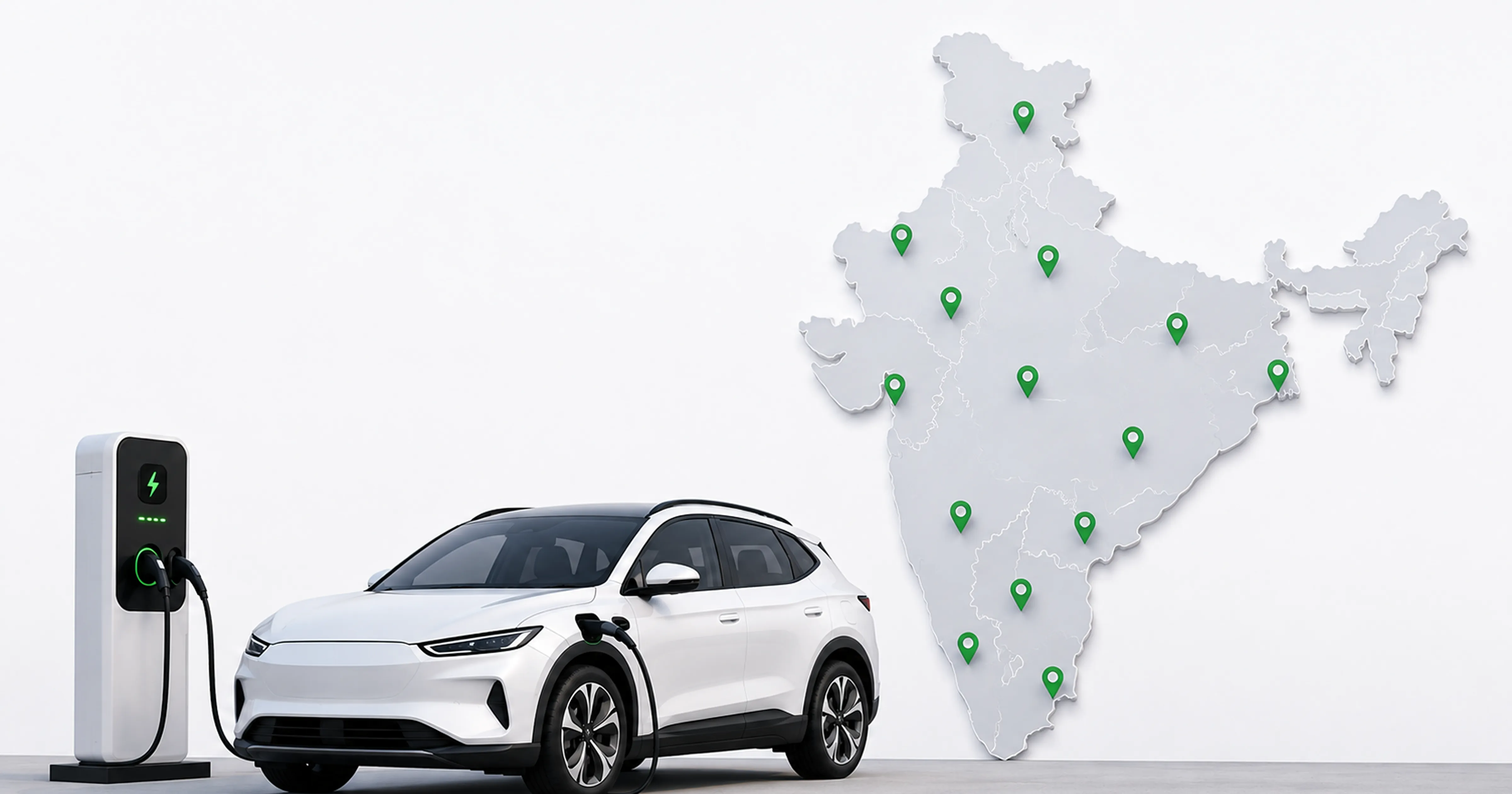
3,500 public charging stations across a country of 1.4 billion people covering 3.28 million square kilometres. For context, India has approximately 80,000 petrol stations. The ratio of fuel availability between petrol and electric is approximately 23:1 in petrol's favour. For a rental company considering whether to put EVs in its fleet, this infrastructure gap determines which routes are viable. Chennai to Pondicherry via ECR — viable, some chargers available. Chennai to Ooty via Mettupalayam ghat — not viable, near-zero chargers on NH181 ghat section. Bangalore to Coorg via SH88 — not viable, SH88 through coffee estates has essentially no charging infrastructure.
Reason 3 — Ghat Roads Have Zero Charging Infrastructure
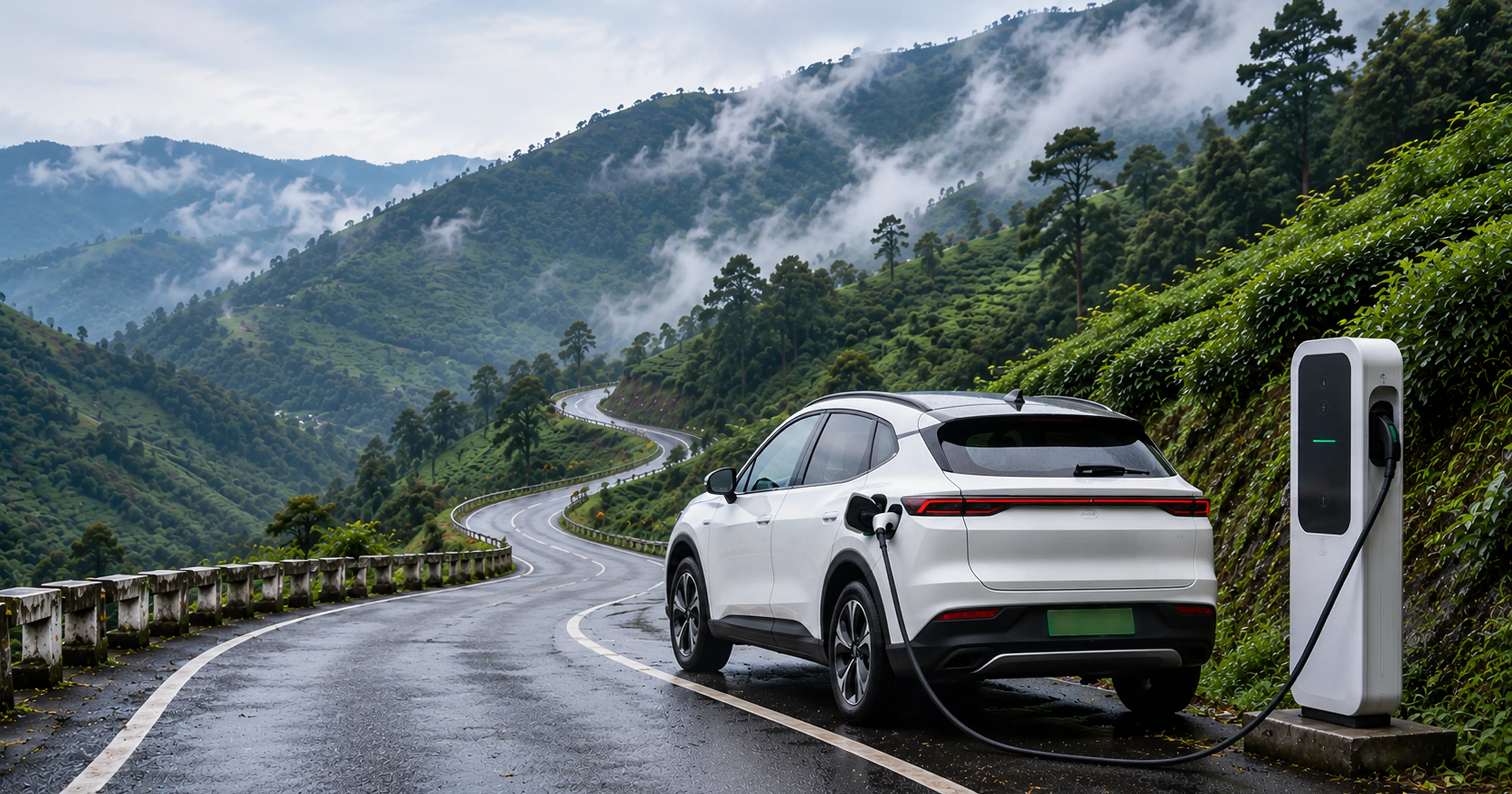
South India's most popular road trip destinations are hill stations accessed via ghat roads. The Mettupalayam to Ooty ghat on NH181 — 36 hairpin bends, 40 km. The SH88 from Kushalnagar to Madikeri through Coorg coffee estates. The Pollachi to Valparai ghat through the Anamalai Hills. The Palani Hills approach to Kodaikanal. None of these routes have EV charging stations. An EV rental car on a Chennai-to-Ooty round trip of 1,150 km — with a real-world range of 300-350 km — would need 3-4 charging sessions. The ghat section alone eliminates the ability to charge mid-route. For a rental company offering unlimited km, putting an EV on a route like this without available charging infrastructure creates a roadside emergency waiting to happen.
Reason 4 — Fleet Cost Is 30-50% Higher Than Petrol Equivalents
A Tata Nexon EV costs ₹14.49-19.99 lakh depending on variant. The petrol Hyundai Creta costs ₹10-19 lakh. The diesel Creta — the most popular rental car in South India — is at the lower end of this range. For a rental company building a fleet, the EV acquisition cost is meaningfully higher. This higher cost must be recovered through higher daily rates — which reduces booking volume — or through a larger number of booking days — which is difficult in a market where EV route viability is limited. The EV has significantly lower running costs per km, but the capital cost recovery challenge is real.
Reason 5 — Commercial EV Insurance Is More Expensive and Less Standardised
The India Motor Tariff regulated by IRDAI has well-established premium structures for petrol and diesel vehicles. EV insurance in India is relatively newer — battery replacement costs, which can be ₹3-8 lakh, create uncertainty for insurers in pricing commercial fleet coverage. Some insurers specifically exclude battery damage from standard comprehensive policies, requiring separate battery insurance. For a rental company managing a fleet commercially, these insurance complexities add operational overhead and cost that does not exist for petrol fleet management.
Where EV Rental Works Perfectly Right Now in 2026
The infrastructure gap does not make EV rental impossible everywhere. It makes it impossible in specific situations and perfectly viable in others. Here is the honest map of where EV rental works in Chennai and Bangalore right now:
| Use case | EV rental works? | Why |
|---|---|---|
| Chennai city daily commute (60-100 km) | ✓ Perfect | Within range, no charging needed, zero fuel cost |
| Chennai to Mahabalipuram return (116 km) | ✓ Perfect | Well within range, no charging needed |
| Chennai to Pondicherry return (324 km) | ✓ Works | Within single charge range, some chargers at Pondicherry hotels |
| Bangalore city daily commute | ✓ Perfect | Within range, zero fuel cost, EV chargers at tech parks |
| Bangalore to Mysore return (290 km) | ✓ Works | Within range, some chargers at Mysore hotels |
| Bangalore to Nandi Hills return (120 km) | ✓ Perfect | Well within range, day trip |
| Chennai to Ooty (575 km one way) | ✗ Not viable | Beyond range, no chargers on NH181 ghat |
| Bangalore to Coorg (270 km, ghat roads) | ✗ Risky | SH88 has no chargers, ghat return needs charge |
| Any ghat road outstation trip | ✗ Not viable | No charging infrastructure on any South India ghat |
| 3-day outstation trip to hill station | ✗ Not viable | Cannot charge at homestay, chargers absent |
The 42% Opportunity — Try Before You Buy
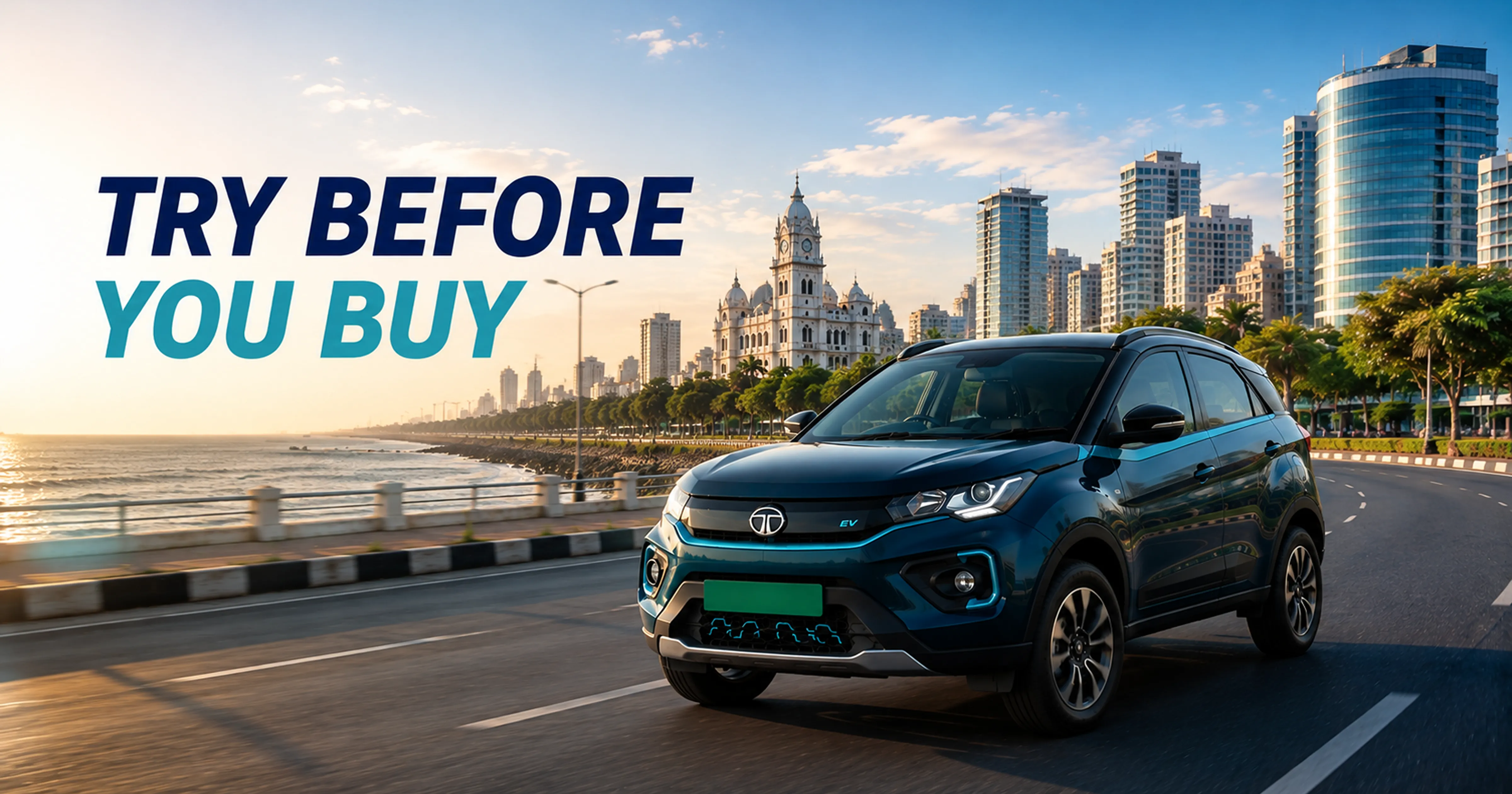
Zoomcar's EV Experience Insight Report 2025 identified a compelling data point from global markets: 42% of EV renters use the rental experience specifically to 'try before they buy.' This is an enormous commercial opportunity in India's context. A family in Chennai or Bangalore considering buying a Tata Nexon EV or an MG ZS EV has genuine uncertainty — about range, about charging in their specific residential area, about how the car performs in Chennai summer heat or Bangalore's stop-start traffic. Renting the same car for 2-3 days from MM Miles answers all of these questions at the cost of a rental rather than a 2-week test drive negotiation at a showroom.
Renting an EV before buying one is arguably the most rational way to make a ₹15-20 lakh purchase decision. Drive it on your actual commute. Park it in your actual apartment complex. See whether your society has a charging point. Experience range on real Chennai or Bangalore roads — not on the manufacturer's test track. The ₹1,299-1,499 daily rate for an MM Miles Nexon EV rental is the cheapest due diligence available for one of the largest purchase decisions most families make.
What Needs to Change for EV Rental to Go Mainstream in India
- Public charging stations need to reach 72,000 — the target set under the PM E-DRIVE scheme administered by the Ministry of Heavy Industries. Current 3,500 stations must grow 20x for EV rental to be viable across all routes
- Highway charging corridors: NHAI and state highway authorities need mandatory EV charging infrastructure every 60-80 km on all national highways — including the approaches to ghat roads
- Ghat road charging: the Tamil Nadu and Karnataka governments need EV charging points at the base and top of key ghat sections — Mettupalayam, Kushalnagar, Pollachi, Dindigul — for EV outstation travel to become viable
- FAME III policy: the successor to FAME II should specifically incentivise commercial EV fleet operators — rental companies — with subsidy structures that reduce fleet acquisition cost
- Standardised commercial EV insurance: IRDAI needs to establish clear pricing norms for commercial EV fleet insurance including battery damage coverage to reduce the operational uncertainty that discourages fleet operators
- Apartment charging infrastructure: BBMP and CMDA need to mandate EV charging points in residential apartment complexes above a certain size — a renter who can charge at home overnight removes the biggest EV rental barrier
For India's EV charging infrastructure data and PM E-DRIVE scheme information visit the Ministry of Heavy Industries at heavyindustries.gov.in. For FAME II subsidy information visit the Bureau of Heavy Industry at bhartiheavyindustries.gov.in. For Tamil Nadu EV policy visit the Tamil Nadu Energy Development Agency at teda.in. For Karnataka EV infrastructure visit the Karnataka Renewable Energy Development Limited at kredl.kar.nic.in.
Considering buying an EV? Rent the Tata Nexon EV from MM Miles in Chennai for 2-3 days first. Drive your actual commute. Test your actual parking. ₹1,299/day, zero deposit, delivered fully charged.
Try the Nexon EV in Chennai →Bangalore city commute with zero fuel cost. MM Miles Nexon EV delivered to Whitefield, Koramangala, HSR Layout. Try before you buy — or just enjoy zero fuel for your city trips.
Try the Nexon EV in Bangalore →