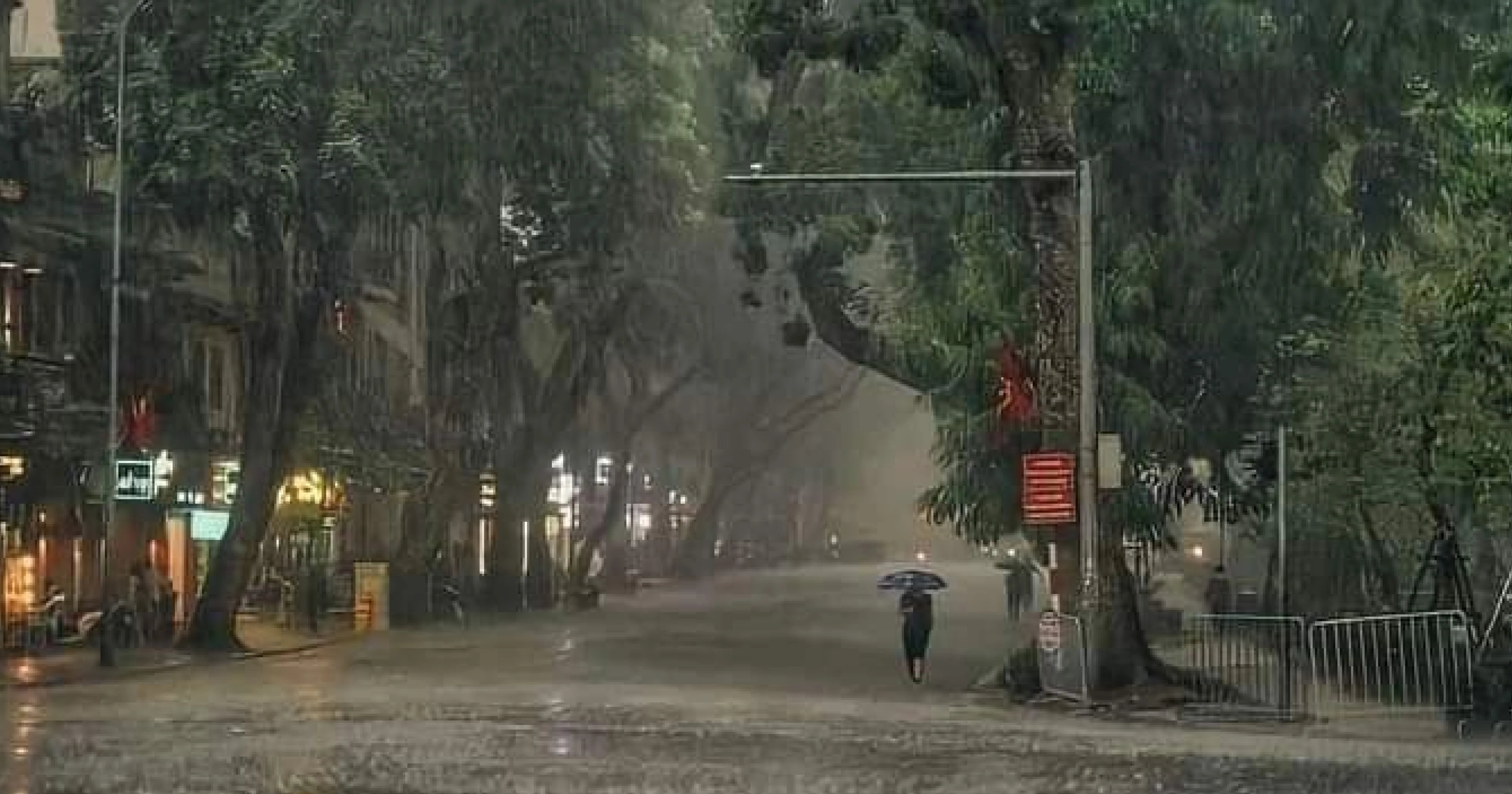
The group chat has been active for two months planning a July friends trip. Then the monsoon arrived and someone dropped the first screenshot — a photo of roads flooded somewhere in Goa or Kerala. Plans started collapsing. The problem is not that monsoon is bad — it is that most people plan monsoon trips to places that get the most rain, not the least. India's southwest monsoon of July and August 2026 drops its heaviest rainfall on the Western Ghats, Kerala, coastal Karnataka and Goa. But behind these rain barriers — in the natural rain-shadow zones — a handful of destinations stay remarkably dry while everything around them turns green. Dhanushkodi in Tamil Nadu gets approximately 1 mm of rainfall in all of July. Ladakh gets 15 mm. Jaisalmer gets 60 mm in a month when Mumbai gets 850 mm. And Tamil Nadu itself — because its heavy rain comes from the northeast monsoon in October, not the southwest monsoon — remains low to moderate rainfall territory in July when your friends group is desperately trying to plan something. This is the complete 2026 guide.
Why Some Places Stay Dry While India Is Drenched
India's southwest monsoon enters through two arms — one over the Arabian Sea and one over the Bay of Bengal. Both arms drop most of their moisture before crossing natural barriers. The Western Ghats wring out the Arabian Sea arm. The Himalayas block the Bay of Bengal arm. What sits behind these barriers is a rain shadow — a zone where clouds arrive depleted and drop little water. The 2026 southwest monsoon arrived in Kerala on May 24, the earliest onset since 2009, with an IMD forecast of 92% of the long-period average — the first below-normal forecast since 2023. This means the rain-shadow zones will be even drier in 2026 than a typical monsoon year, and even the actively rainy destinations like Coorg will see fewer landslide closures than a heavy monsoon year.
The 8 Best Low-Rainfall Destinations — Ranked by Dryness
| Destination | July rainfall | Distance from Chennai | Distance from Bangalore | Best for |
|---|---|---|---|---|
| Dhanushkodi, Tamil Nadu | ~1 mm | 635 km (9 hrs) | 820 km (12 hrs) | Dramatic coastal drive, ghost town |
| Leh, Ladakh | ~15 mm | Fly — 3 hrs | Fly — 2.5 hrs | High altitude, monasteries, Pangong |
| Spiti Valley, Himachal Pradesh | ~15 mm | Fly to Bhuntar, drive | Fly to Bhuntar, drive | Cold desert, remote monasteries |
| Jaisalmer, Rajasthan | ~60 mm | 1,750 km (train/fly) | 1,600 km (train/fly) | Desert, forts, camel safari |
| Udaipur, Rajasthan | ~90 mm | 1,700 km | 1,400 km | Lakes, palaces, romance |
| Yercaud, Tamil Nadu | Moderate | 363 km (5.5 hrs) | 580 km (8.5 hrs) | Closest hill station, less crowded |
| Coorg, Karnataka | Heavy but manageable | 820 km via Chennai | 270 km (5 hrs) | Green coffee estates, monsoon beauty |
| Dhanushkodi and Rameswaram | ~1-5 mm | 570 km (8.5 hrs) | 760 km (11 hrs) | Heritage, ghost town, lowest rain |
Destination 1 — Dhanushkodi, Tamil Nadu: India's Driest July Spot
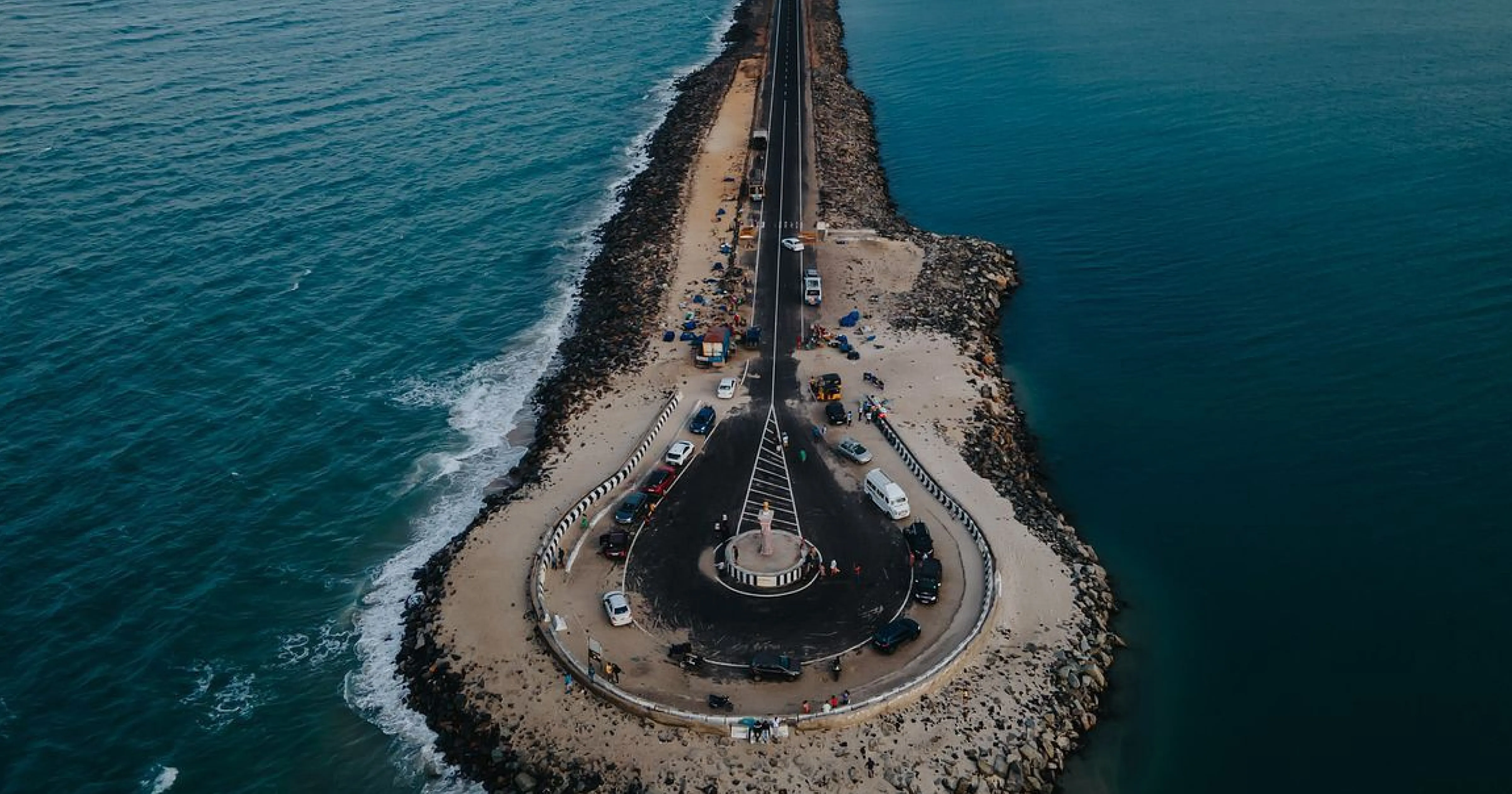
Dhanushkodi is India's driest place during the July monsoon — approximately 1 mm of rainfall in the entire month. It sits at the southeastern tip of Tamil Nadu at the meeting point of the Bay of Bengal and the Indian Ocean, in the natural rain shadow of the Western Ghats. The southwest monsoon that drenches Kerala and the Western Ghats arrives at Dhanushkodi depleted and dry. The town's heavy rains come from the northeast monsoon in October and November — making July genuinely one of its driest months.
Dhanushkodi is also one of India's most unique travel destinations. The original town was destroyed by the 1964 cyclone that killed approximately 1,800 people — making it one of independent India's deadliest natural disasters. The ruins of the railway station, church, post office and residential buildings remain as a ghost town on a narrow sand spit. Rameswaram, 18 km from Dhanushkodi, houses the Ramanathaswamy Temple — one of the Char Dham pilgrimage sites in Hinduism — and one of India's most remarkable temple corridors at 1.2 km in length. The drive from Chennai via NH44 and NH38 through Madurai and Ramanathapuram is 635 km and takes approximately 9 hours. July is actually one of the best months to visit — dry, slightly less hot than peak summer, and almost entirely free of the tourist crowds that arrive in December.
Destination 2 — Yercaud, Tamil Nadu: Closest Monsoon Hill Station From Chennai
Yercaud at 1,515 metres in the Shevaroy Hills is 363 km from Chennai — 5.5 hours on NH44. Tamil Nadu receives its heaviest rainfall from the northeast monsoon in October and December, not the southwest monsoon of July. In July 2026, Yercaud sees moderate rainfall — enough to make the coffee estates and Yercaud Lake look extraordinary, but not the heavy sustained rain that makes Goa or Kerala genuinely difficult to navigate. Lady's Seat and Gent's Seat viewpoints. The Shevaroys Coffee Estate. The Buddhist temple. For a Chennai friends group that wants a hill station experience without going all the way to Ooty (575 km) or dealing with Western Ghats rain, Yercaud in July is the practical answer. Leave Friday evening after work, arrive by 11 PM, full Saturday and Sunday morning at the hill station, back by Sunday evening.
Destination 3 — Coorg, Karnataka: Monsoon Green at Its Best (From Bangalore)
Coorg in July is not low-rainfall — it is one of India's rainiest districts with 2,500+ mm annually. But the 2026 IMD forecast of 92% of long-period average means fewer landslide closures than typical years, and Coorg's rainy season is when it looks its most extraordinary. Coffee estates at their deepest green. Abbey Falls at near-peak volume. Raja's Seat in Madikeri with mist rolling through Western Ghats valleys in real time. For a Bangalore friends group that has seen Coorg in December and wants to experience it differently — July is that visit. The rule is simple: never drive SH88 or any Coorg ghat road after 5 PM. Never attempt trekking on trails specifically flagged for slippery or mudflow risk. Check Karnataka Forest Department road advisories before departure. With those precautions followed, Coorg in July delivers an experience that is simply not available in any other season.
Destination 4 — Udaipur, Rajasthan: The Romance of Low-Rain Monsoon Rajasthan
Udaipur receives approximately 90 mm of rainfall in July — significant for a desert city, but mild compared to South India's monsoon. The monsoon fills Lake Pichola and Fateh Sagar Lake to their banks — the City Palace reflection on a post-rain Lake Pichola is one of India's great travel photographs. Temperatures in July sit at 28-35°C — warm but manageable compared to the 45°C+ of May and June. Hotels and boat rides on Lake Pichola cost 20-30% less than December-February peak season. The monsoon also brings a lush greenery to the Aravalli Hills surrounding Udaipur that makes the city look remarkably different from its dry-season appearance. From Chennai or Bangalore the most practical route is flight to Udaipur airport (8 km from the city centre) or train — the self drive from South India to Rajasthan is a committed multi-day trip rather than a weekend.
Destination 5 — Ladakh: The Rain-Shadow Himalayan Desert in July
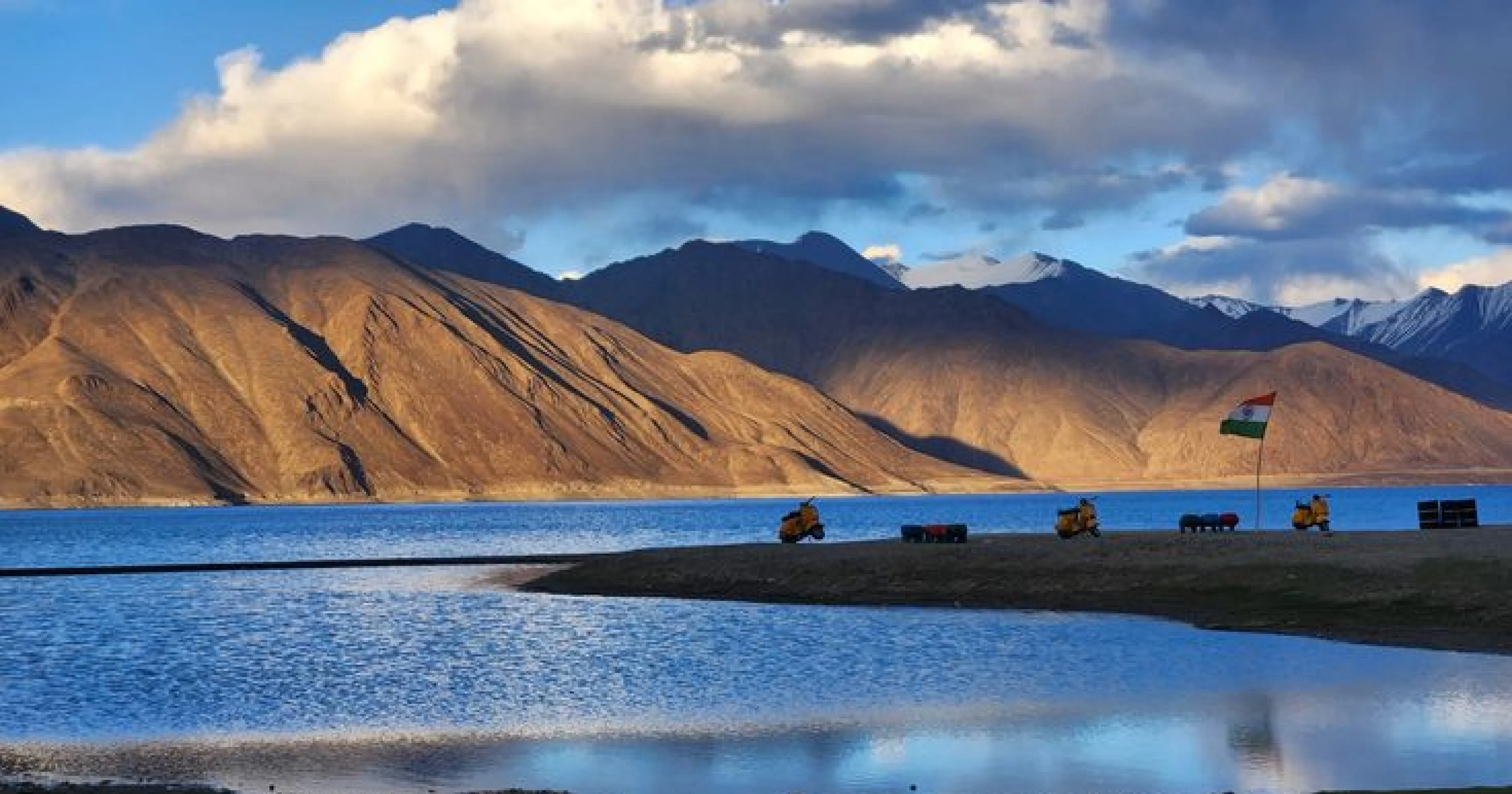
Leh receives approximately 15 mm of rainfall in July — less in a month than many South Indian cities get in an afternoon shower. Ladakh sits behind the Himalayas in a cold desert rain-shadow zone that the southwest monsoon simply cannot reach. July is Ladakh's peak season — roads fully open, skies clear, temperatures of 11-25°C, Pangong Tso Lake accessible, Nubra Valley reachable via Khardung La pass. The Hemis Festival — one of the largest Buddhist festivals in the region — falls in late June to early July 2026. From Chennai or Bangalore the practical route is a direct flight to Kushok Bakula Rimpochee Airport in Leh. The overland route via Manali or Srinagar crosses some rain-affected stretches — check road status before committing. Allow 2 days in Leh for altitude acclimatisation before any high-pass driving. Indian nationals pay a one-time Ladakh Environment and Health Fee at lahdclehpermit.in.
The Driveable Low-Rain Routes From Chennai and Bangalore
| Route | From | Distance | Rainfall in July | Drive tips |
|---|---|---|---|---|
| Chennai → Yercaud | Chennai | 363 km, NH44 | Moderate — driveable | Leave Friday 5 PM, reach by 11 PM |
| Chennai → Dhanushkodi | Chennai | 635 km via Madurai | ~1 mm — almost none | Leave early, 9-hour drive, stay Rameswaram |
| Chennai → Kodaikanal | Chennai | 466 km, NH44 + NH83 | Moderate + misty | Diesel car, avoid ghat after 5 PM |
| Bangalore → Coorg | Bangalore | 270 km, NH275 + SH88 | Heavy but manageable | Leave 6 AM, back by sunset, diesel SUV |
| Bangalore → Chikmagalur | Bangalore | 250 km, NH75 | Moderate + green | Hebbe Falls at peak, Mullayanagiri |
| Bangalore → Mysore | Bangalore | 145 km, NH275 | Light | Day trip, Brindavan Gardens post-rain |
Best Cars for a Monsoon Friends Road Trip
Best for monsoon friends trips. High ground clearance handles wet roads confidently. 7 seats for the full group. Diesel engine braking essential on wet Coorg SH88 descents. Boot space for full weekend luggage for 5-7 people. For any monsoon ghat route — Coorg, Kodaikanal, Yercaud, Chikmagalur — the Fortuner is the right car.
View Toyota Fortuner →Best for monsoon driving safety. ADAS features including lane keeping and automatic emergency braking add genuine confidence on wet single-lane ghat sections with limited visibility. Diesel torque handles wet climbs. Best choice for a friends group prioritising safety on the SH88 Coorg ghat or the Kodaikanal Palani Hills approach in active monsoon.
View Mahindra XUV700 →Best for flat highway monsoon routes — Dhanushkodi from Chennai, Mysore from Bangalore. Diesel efficiency keeps fuel cost minimal on the long Tamil Nadu highway stretch. Compact enough for Rameswaram's pilgrimage town narrow streets. For groups of 4 on routes without ghat sections, the Creta is the most economical and capable choice.
View Hyundai Creta →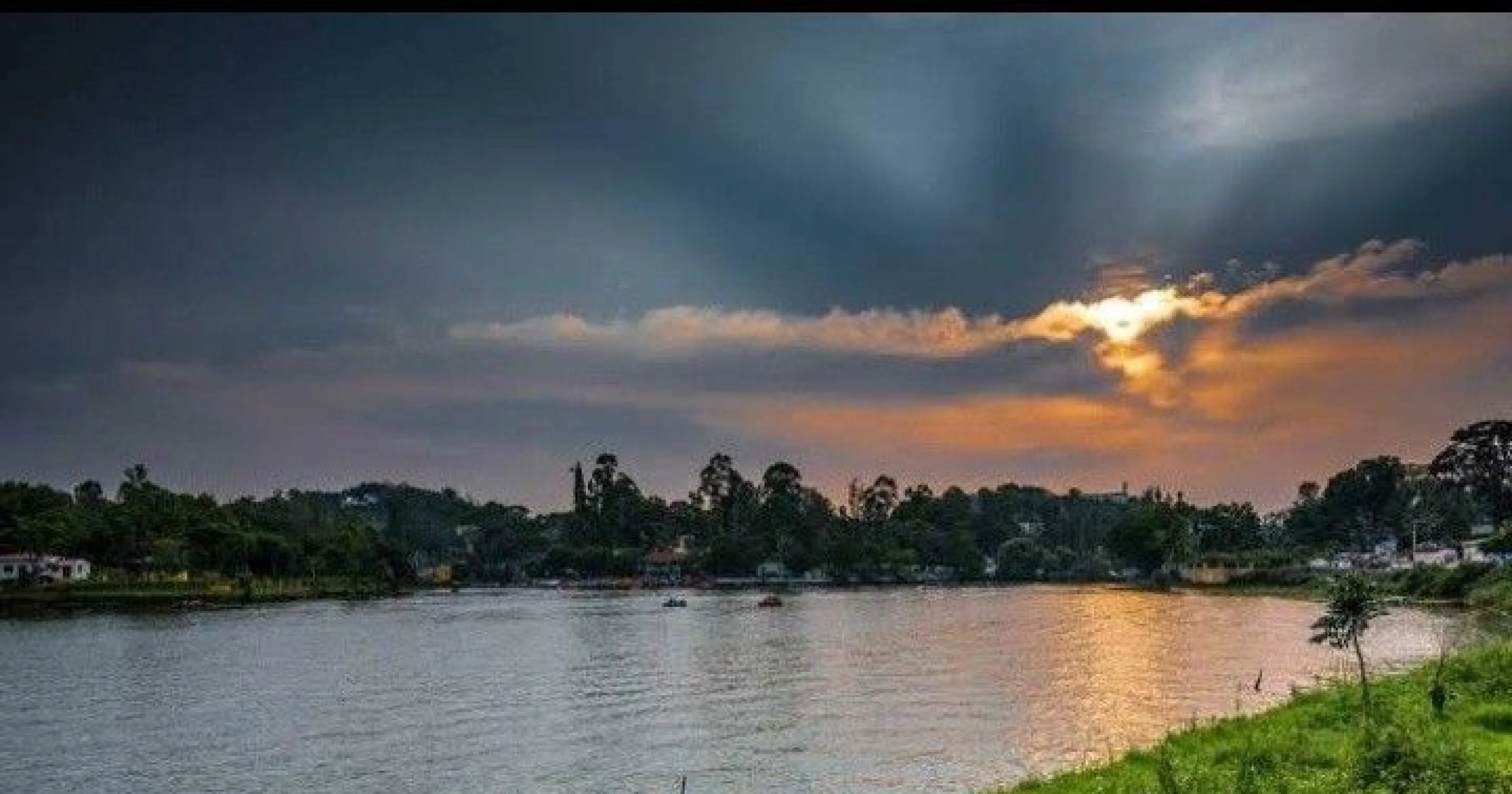
Monsoon Road Trip Checklist for a Friends Group
- Book a diesel SUV — engine braking on wet ghat descents is significantly safer than petrol; the Fortuner or XUV700 for groups of 5-7
- Check IMD Nowcast before departure at mausam.imd.gov.in — real-time rainfall radar updated every 30 minutes
- Check Karnataka Forest Department road advisories for Coorg and Chikmagalur before leaving
- Never drive ghat roads after 5 PM in monsoon — mist and fading light create near-zero visibility on SH88 and NH181
- Download offline Google Maps at the last major town — signal disappears on SH88 Coorg, Yercaud ghat and Dhanushkodi's final stretch
- Carry rain ponchos and waterproof bags for cameras and electronics — not umbrellas which are useless in gusty ghat rain
- Book homestays in advance — the best estate homestays in Coorg and Yercaud fill up even in monsoon, just fewer weeks in advance than peak season
- Fill fuel before every ghat section — limited stations on SH88, Yercaud ghat, and the Dhanushkodi spit beyond Rameswaram
- For Dhanushkodi specifically — only a 4WD or high-clearance vehicle should attempt the 8 km sand road to the ghost town tip; confirm road status with Rameswaram locals before attempting
- Pack salt or anti-leech socks for any forest walking in Coorg or Chikmagalur — leeches are active on forest paths in monsoon
For real-time monsoon rainfall data and road advisories visit the India Meteorological Department at mausam.imd.gov.in. For Karnataka ghat road status and Coorg travel advisories visit the Karnataka Forest Department at aranyakavereonline.karnataka.gov.in. For Tamil Nadu road conditions visit tamilnadutourism.tn.gov.in. For Ladakh permit information visit lahdclehpermit.in.
Planning a monsoon friends trip from Chennai? MM Miles — Toyota Fortuner, XUV700 or Creta diesel delivered to your door. ₹799/day, zero deposit, 24/7 support. Same flat rate in monsoon season.
Book Self Drive Car for Your Friends Trip — Chennai →Bangalore friends group planning Coorg or Chikmagalur this monsoon? MM Miles delivers to Whitefield, Koramangala, HSR Layout and all areas — diesel SUV ready for ghat roads.
Book Self Drive Car for Your Friends Trip — Bangalore →