How does a car rental security deposit work? In simple terms, the rental company holds some of your money while you have its car, so it can recover the cost of anything that goes wrong — damage, missing fuel, late return, tolls or traffic fines. In practice, the deposit is where a lot of frustration starts. Money gets blocked on a debit card for weeks. Refunds arrive later than promised, or smaller than expected, with deductions nobody explained. None of that has to happen to you. This guide explains how deposits are taken, exactly what can be deducted, why refunds take the time they do, how to protect yourself, what to do if a refund goes wrong — and how zero-deposit rentals handle the same charges without blocking your money at all.
How a Security Deposit Works, Step by Step
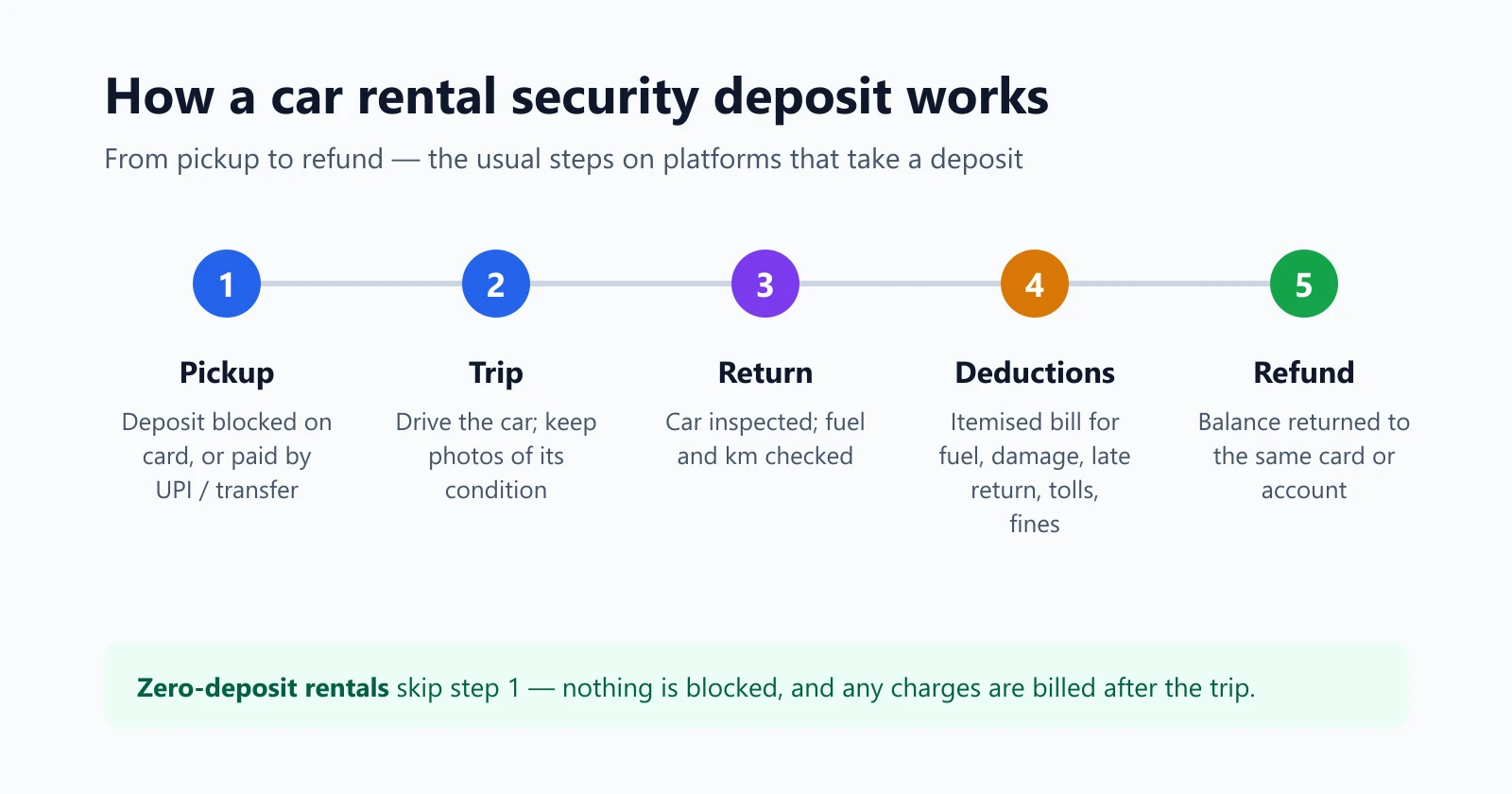
- At booking or pickup: the company blocks the deposit on your card, or you pay it by UPI or bank transfer. Amounts in India commonly range from ₹2,000 for small cars to ₹10,000 or more for SUVs and premium cars.
- During the trip: the money stays with the company, or blocked on your card.
- At return: the car is inspected for damage, cleanliness, fuel level and kilometres driven.
- After return: the company waits for tolls and traffic fines from your trip to appear, gets repair estimates if there is damage, and works out what you owe.
- Refund: the deposit minus any deductions is returned to the card or account you paid from, ideally with an itemised list of what was deducted and why.
Card Block, Debit Card or UPI — It Makes a Big Difference
| Payment method | What happens to your money | How it comes back |
|---|---|---|
| Credit card block (pre-authorisation) | Not charged — your available credit limit is reduced | Block released by the company or automatically by the bank; can take days to weeks |
| Debit card block | Real money held in your bank account | Released like a credit card block — your balance is reduced until then |
| UPI or bank transfer | Money paid to the company | Refunded as a new transaction to the same account |
| Cash | Money paid to the company | Returned in cash or by transfer — always get a receipt |
Pay a deposit with a credit card if you can. A block on a credit card only reduces your available limit; a debit card block or UPI deposit takes real money out of your bank balance until it comes back.
What Can Be Deducted From Your Deposit
| Deduction | When it applies | How to avoid it |
|---|---|---|
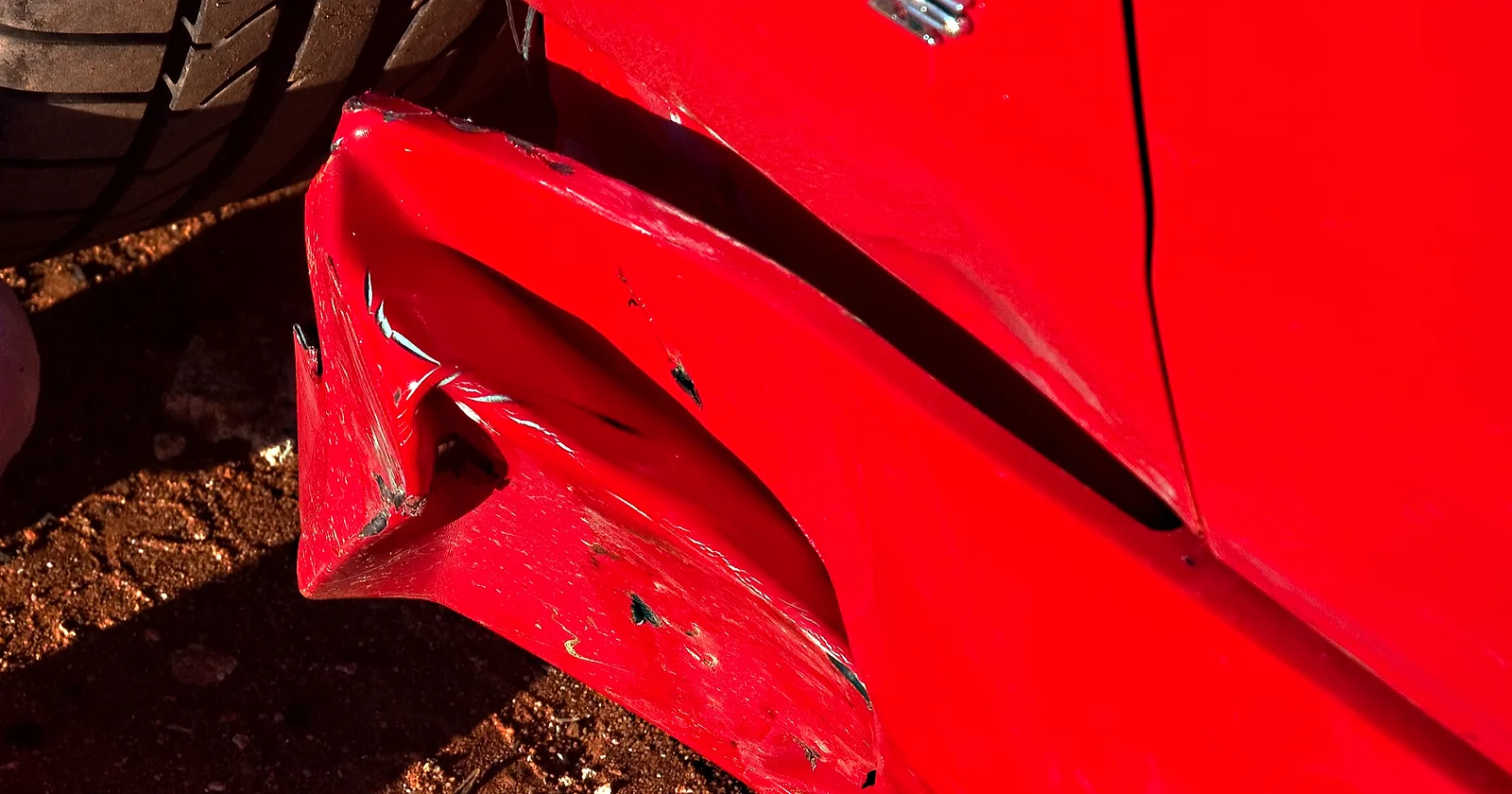
| Damage | Dents, scratches or other damage not covered by your protection plan | Photograph the car at pickup and return; drive carefully; report incidents at once |
| Fuel shortage | Car returned with less fuel than at pickup | Refuel to the same level just before returning |
| Extra kilometres | Bookings with a km allowance, driven beyond it | Check the km terms before a long trip |
| Late return | Car returned after the booked time | Leave a buffer; extend in advance if you need more time |
| Cleaning | Stains, sand, pet hair, smoking or a strong smell | Return the car reasonably clean; never smoke inside |
| Tolls | Tolls paid through the car's FASTag during your trip | Expect them — they are a normal trip cost |
| Traffic fines | Challans for speeding, signals or parking during your trip | Follow traffic rules; fines can arrive weeks later |
| Lost keys or accessories | Missing key, documents, tools or accessories | Check everything is in the car at return |
Why Deposit Refunds Take Days or Weeks
A delayed refund is not always a bad sign. Some of the costs from your trip only appear after you hand the car back. Tolls charged to the car's FASTag can post a day or two later. Traffic challans from speed cameras and signal cameras can reach the vehicle owner days or even weeks after the offence. If the car needs repairs, the company may wait for an estimate from a service centre. Then, once the company releases the money, the bank adds its own processing time — typically a few days for UPI and bank transfers, and around a week for cards.
What matters is that the company tells you, before you book, how long the refund normally takes, and keeps you updated if it takes longer. A company that holds a deposit for weeks with no explanation, or deducts amounts without evidence, is a company to avoid next time.
If your deposit was taken from a debit card or by UPI, plan your budget as if that money is gone for two to three weeks after the trip. That way a slow refund will not leave you short.
Deposit, Damage Protection and Insurance — Not the Same Thing
| What it is | What it does for you | |
|---|---|---|
| Security deposit | Money held by the rental company during the trip | Covers what you owe after the trip; refunded if nothing is owed |
| Damage protection | A charge or plan added to your booking | Limits how much you pay if the car is damaged, subject to its exclusions |
| Motor insurance | The car's insurance policy | Covers major damage, theft and third-party claims under the policy terms |
A deposit does not limit what you might owe — it is simply money the company can draw on first. Damage protection is what limits your liability. Read its exclusions carefully: driving under the influence, unlisted drivers, off-road use and not reporting an accident in time usually void it completely.
How to Protect Your Deposit
- Before booking, ask four questions: how much is the deposit, is it a block or a payment, what can be deducted, and how long does the refund take?
- Pay with a credit card where possible.
- At pickup, photograph or video all four sides of the car, the roof, the interior, the odometer and the fuel gauge. Make sure existing damage is noted.
- Report any incident to the rental company immediately, with photos, even if the damage looks minor.
- Return the car on time, with the same fuel level, and reasonably clean.
- At return, photograph the car again in the same way, and ask for the return condition to be confirmed.
- Keep your booking confirmation, payment receipt and all messages until the refund is complete.
If Your Refund Is Late or the Deductions Look Wrong
- Ask the rental company in writing — email or WhatsApp — for an itemised list of deductions with evidence: photos, repair invoices, toll records or challan copies.
- Share your own pickup and return photos if they contradict a damage or fuel charge.
- Escalate to the company's support or grievance contact if the first reply does not resolve it.
- If you paid by card, you can raise a dispute with your card issuer for a charge you did not agree to.
- Contact the National Consumer Helpline on 1915, or through its app or website.
- As a last step, file a complaint with the consumer commission online through the e-Daakhil portal.
How Zero-Deposit Rentals Work
A zero-deposit rental skips the deposit entirely: nothing is blocked on your card and nothing is taken from your account beyond the booking amount. That does not mean there are no post-trip charges. Fuel shortage, late returns, tolls, traffic fines, cleaning and damage still apply — they are simply billed to you after the trip instead of being deducted from money the company is already holding. For you, the difference is cash flow: your money stays in your account, and you only pay if something is actually owed.
How It Works on MM Miles
| Item | MM Miles policy |
|---|---|
| Security deposit | Zero |
| Damage protection | Mandatory on every booking |
| Accidental external damage | Fixed ₹4,500 per incident, subject to inspection |
| When full repair cost applies | Drink or drug driving, unlicensed or unlisted driver, off-road use, waterlogging damage, interior damage, rash driving, or not reporting an accident within 2 hours |
| Fuel | Return at the same level; any shortage is charged |
| Late return | Hourly charge up to 4 hours; full-day charge beyond 4 hours |
| Tolls, traffic fines, cleaning | Charged to the renter after the trip |
| When damage liability is paid | At the end of the trip |
If anything happens to the car, inform MM Miles within 2 hours and share photos and videos straight away — reporting late is one of the exclusions that removes your protection. Damage is assessed through authorised service centres. Our guide to car rental accident insurance explains the protection in more detail.
A popular compact SUV for city trips and weekends — book with zero deposit.
View Maruti Fronx →The family favourite for road trips — no money blocked while you travel.
View Hyundai Creta →Keep your money in your account. Rent a self drive car on MM Miles with zero security deposit — and see the full price breakdown before you pay.
Book With Zero Deposit →Photo credits: cover — "New Car" by Caitlinator / Flickr, CC BY 2.0; Wikimedia Commons: damaged car panel by Phillip Capper, CC BY 2.0; fuel gauge by Tony Webster, CC BY 2.0. MM Miles policies are summarised from our terms and insurance pages; check them for the full, current wording.